
Coat Countertops With Seamless, Moisture-Resistant Finishes
Epoxy Counter Tops in South Jordan for kitchens, bathrooms, and workspaces needing durable surfaces without full replacement
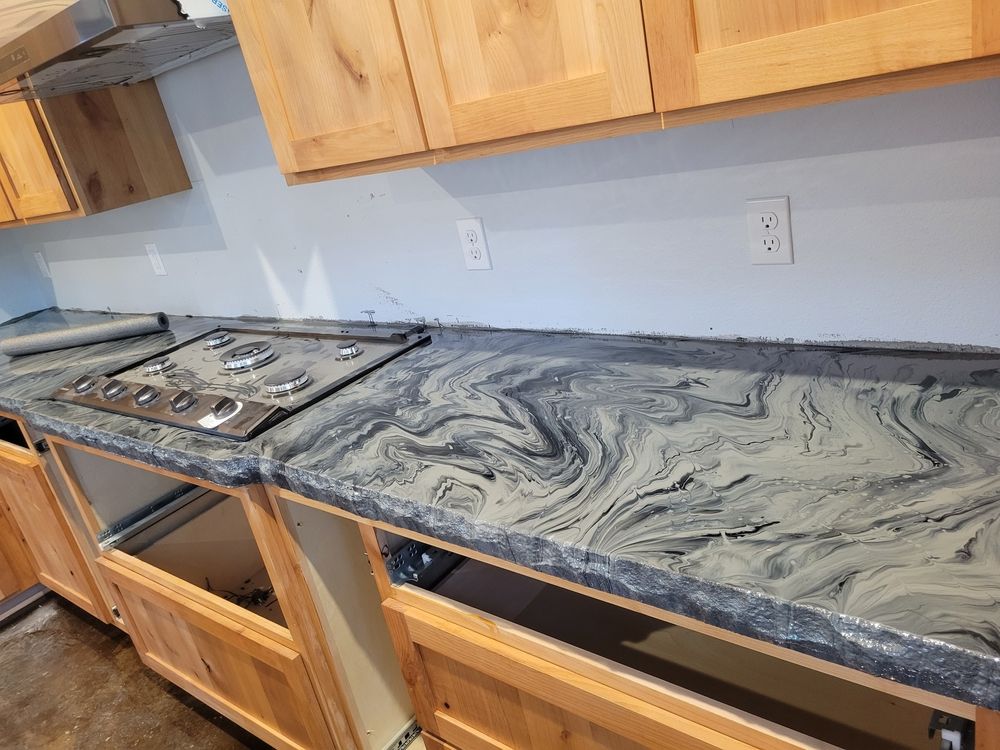
Utah Painting Express applies custom epoxy coatings to countertops across South Jordan for homeowners looking to refresh worn laminate, tile, or outdated solid surfaces without the cost and disruption of a full tear-out and replacement. You might be dealing with chipped edges, stained grout lines, or discolored laminate that no longer matches your updated cabinets and fixtures. Epoxy creates a smooth, seamless layer that covers the existing material and provides a stone-inspired, metallic, or high-gloss finish that resists moisture, stains, and daily wear. The process involves thorough surface prep including cleaning, sanding, and filling imperfections, followed by the application of primer, colored epoxy layers, and a clear topcoat that cures to a hard, glass-like finish.
Surface preparation determines how well the epoxy bonds and how long the coating lasts. Laminate and tile must be sanded to remove gloss and create a mechanical profile, and any loose edges or damaged areas are repaired or reinforced. Grout lines in tile countertops are filled and leveled so they do not telegraph through the coating. The epoxy is mixed in small batches and applied in thin layers, with each coat allowed to cure before the next is added. Decorative techniques such as marbling, metallic swirls, or embedded objects can be incorporated during the build-up phase, and the final clear coat adds depth and UV protection while sealing the design.
If your countertops look dated or damaged and you want a fresh finish without a major renovation, contact Utah Painting Express to discuss epoxy coating options and schedule a consultation in South Jordan.
Detailed Prep and Curing for Long-Term Performance
You want a countertop surface that holds up to hot pans, spilled liquids, and daily cleaning without peeling or discoloring, which requires proper prep and high-quality epoxy resin. The existing surface must be completely clean and dry, with all oils, waxes, and residues removed so the primer can bond. Any chips or cracks are filled and sanded flush, and seams are reinforced to prevent the epoxy from sinking or cracking along weak points. Temperature and humidity are controlled during application because epoxy cures through an exothermic reaction that can accelerate in warm conditions and slow in cold, affecting the final hardness and clarity.
After the final clear coat cures, you will see a smooth, reflective surface that looks like poured resin or polished stone depending on the finish you selected. The coating is seamless across the entire countertop, with no grout lines or seams to trap dirt or moisture. Spills bead on the surface and wipe away easily, and the finish resists staining from coffee, wine, and common household chemicals. The cured epoxy is heat-resistant to a point, but trivets are still recommended for very hot cookware to avoid surface dulling over time. The coating does not chip or peel under normal use, and it maintains its gloss and color without needing to be resealed.
Epoxy countertop projects require the kitchen or bathroom to be out of use for several days while the coating cures, so plan for alternative meal prep and washing areas during that time. The work is typically completed in phases, with primer and base coats applied on day one, decorative layers on day two, and clear coats on day three, followed by a full cure period of up to a week before heavy use. This timeline ensures the coating reaches full hardness and chemical resistance before it is subjected to daily wear.
What to Expect With Epoxy Countertop Coatings
Homeowners considering epoxy countertops often have questions about durability, maintenance, and how the process compares to traditional countertop replacement.
How thick is the epoxy coating once it cures?
Most countertop epoxy systems build up to approximately one-eighth inch total thickness after multiple coats, which provides durability without adding excessive weight or requiring cabinet modifications.
What surfaces can be coated with epoxy?
Laminate, tile, solid surface, and wood countertops can all be coated as long as they are structurally sound, clean, and properly prepared with sanding and primer to ensure adhesion.
When should you replace a countertop instead of coating it?
If the substrate is severely damaged, water-logged, or structurally unsound with sagging or detached sections, replacement is a more reliable option than trying to coat over compromised material.
Why does epoxy sometimes develop bubbles or fisheyes?
Contamination from oils, moisture, or insufficient mixing can cause defects, which is why thorough prep and controlled application conditions are critical to achieving a flawless finish.
How does humidity in South Jordan affect epoxy curing?
Low humidity accelerates solvent evaporation and can cause the epoxy to cure too quickly, leading to lap marks or reduced flow, so installers adjust working time and application techniques to match local conditions.
Utah Painting Express walks you through design options, prep requirements, and curing timelines before starting your countertop project, ensuring you understand what to expect and how to care for the finished surface. If you are ready to update your kitchen or bathroom countertops, reach out to request samples and discuss scheduling for your epoxy coating project.